Remembering a Loved One: How to Collect Shared Family Memories
How to gather the memories of a deceased loved one? See how relatives can easily record their stories by speaking and create a shared memorial book.
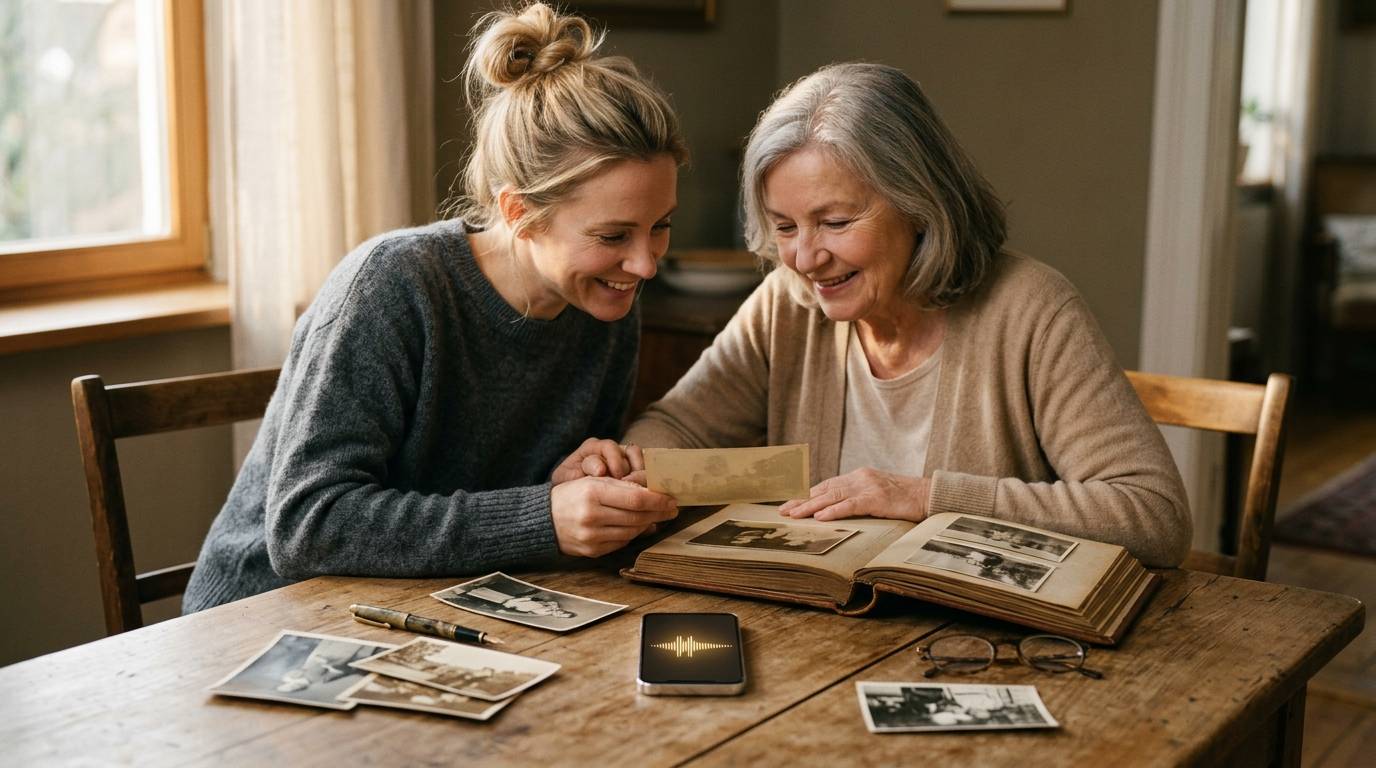
When a loved one passes away, they leave behind sorrow, but also a vast amount of precious memories. After funerals and memorial services, the extended family often gathers, and stories are shared around tables that not everyone has even heard before. This shared remembering the deceased is a vital part of grief work.
As time passes, however, the stories told in these moments begin to fade from the minds of the living as well. How can a family ensure that these precious memories are saved before it is too late?
The Challenges of a Shared Memorial Book
Many families dream of compiling a shared memorial book, where every relative and friend could add their own story about the deceased. In practice, this often falls apart due to two problems:
- The difficulty of writing: In the midst of grief, writing a long essay or obituary feels insurmountably heavy to many.
- Coordination: The burden falls on one family member to collect emails, notes, and text messages from dozens of different people, making the project exhausting.
In moments like these, the principle (Don't Let Stories Disappear: Why Grandparents' Memories Should Be Saved Now) is an important guideline. Even though the main character is gone, their story still lives on in you—but only if it is collected.
Sanota Makes Reminiscing Communal and Asynchronous
The Sanota memoir app offers a sensitive and effortless solution that removes the burden of writing and the pain of organizing. It enables asynchronous collection, meaning memories can be recorded at everyone's own pace.
Here is how it works in practice:
You can create a question in Sanota, such as "What is your dearest or funniest memory of Grandpa?" and send it as a link to all the relatives.
Relatives can open the link on their phones entirely in their own peace, whenever they feel ready. They don't have to write a single word; they can just press a button and speak their memory out loud. Sanota's AI listens to each person's speech and automatically turns it into beautiful text in the same, shared family memorial book.
A Private Space for Grief
When you are collecting shared memories, it is of the utmost importance that the space is safe. Grief and the stories connected to it are intimate, and they do not belong in public social media groups where they are exposed to outside eyes and algorithms.
Sanota's closed platform ensures that (Saving Family Stories Safely: Privacy vs. Social Media) is always the number one priority. Only the people to whom you send the link can participate in creating the memorial book.
Grief work is easier when you don't have to do it alone. Combine your family's memories and create a book that will provide comfort for decades to come.
Start compiling a shared memorial book with Sanota – try it for free here.