How to Interview Grandparents on Tape? 7 Tips for a Natural Conversation
Do you want to record your grandparents' life story? Read 7 practical tips to create a relaxed interview setting and capture the best memories.
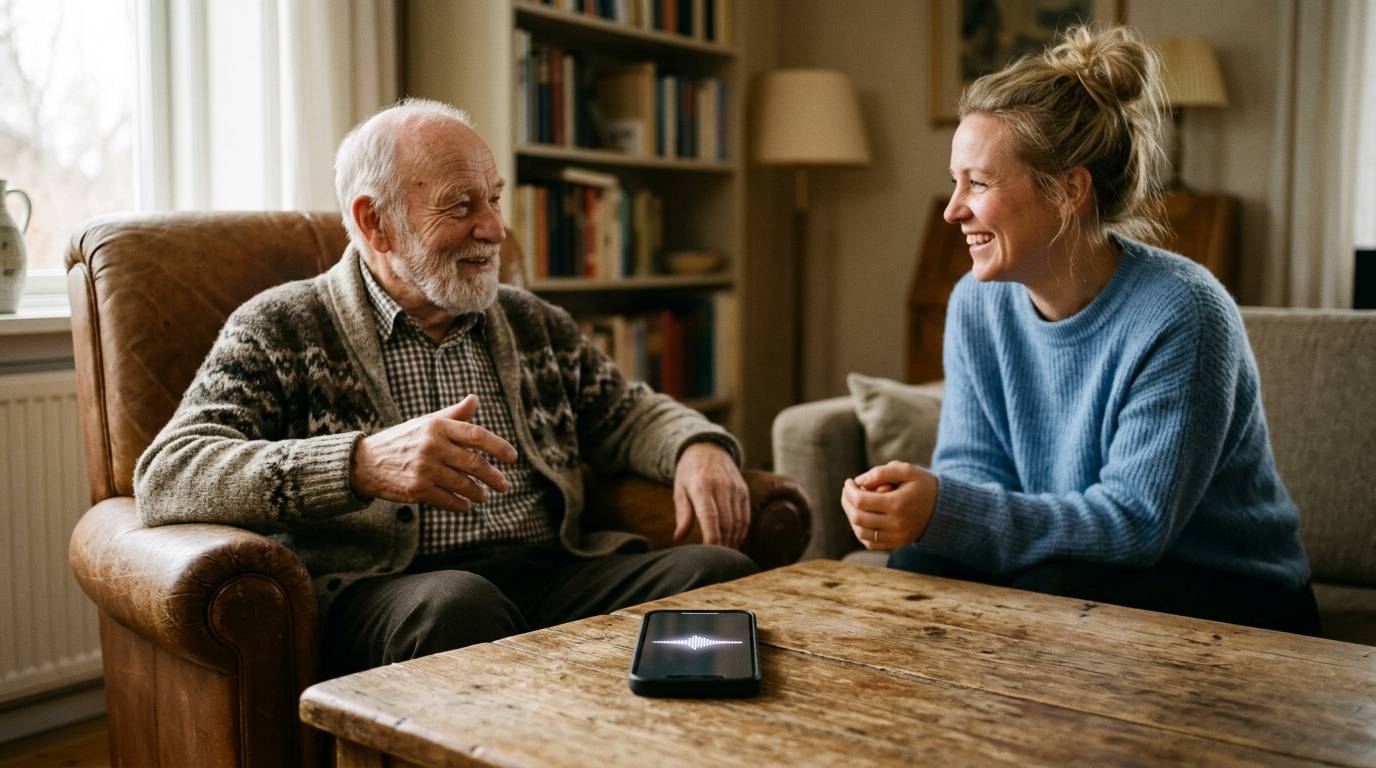
Capturing a life story is a unique gift for future generations. But when you sit in front of your grandparent with a recorder or a phone, the situation can quickly become stiff. Many wonder how to interview grandparents so that memories truly surface and the "official" setting doesn't make either of you nervous.
This interview guide is designed exactly for this need. With the right approach, recording life story details transforms from a heavy project into a warm-hearted chat, allowing the most valuable family stories and memoirs to flow freely.
(Looking for good questions to base your interview on? Check out our list: 100 Best Questions for Grandparents)
1. Forget the Formality – It’s About Chatting
The word "interview" easily brings to mind news broadcasts and strict questionnaires. Instead, tell your grandparent that you just want to spend some time together and hear about their youth. Make some coffee, sit comfortably around the kitchen table or on the living room couch. The more casual the situation is, the better the stories will come alive.
2. Prepare Only a Few Core Questions
Don’t proceed with a strict list. Choose 2–3 themes (for example, their childhood home and their first job) and let the conversation branch out. The best memories are often born on side paths. If your grandparent gets excited talking about another topic, let them share it.
3. Use Photos and Objects as Prompts
People remember things much better through visual and tactile stimuli. Bring out an old photo album or ask them to tell you about an old object in their home. "Who is in this picture, and what do you remember about this day?" is often the best way to open the floodgates and bring out the details.
4. Don't Act as a Scribe – and Forget Traditional Voice Recorders
If you try to write down answers on paper or type them on a laptop, eye contact is lost, and the magic of the moment breaks. You need to be able to focus entirely on listening.
Using a traditional voice recorder, on the other hand, often brings a new problem: you will later have to spend hours transcribing the recording word for word. Fortunately, technology has moved forward. With modern services, simply placing your phone on the table is enough.
Read our broader comparison: From Voice Messages to a Real Book: How to Utilize Your Phone for Recording
5. Ask "How did it feel?", Not Just "What happened?"
Facts are interesting, but emotions make a story come alive. When your grandparent recounts a past event, deepen it by asking: "How did you feel back then?" or "What did you learn from that situation?". This way, you bring out true life wisdom instead of just writing history.
6. Allow Space for Silence
This is your most important skill as a listener. When your grandparent finishes a sentence, don't rush to ask the next question immediately. Count to three in your head. People often continue the story on a slightly deeper level after a brief silence once they have had a moment to gather their thoughts.
7. You Can Also Do It Remotely
Not everyone has the opportunity to sit at the same table regularly. Fortunately, preserving family history doesn't always require physical presence. With modern tools, you can send a question to your grandparent as a link. They can open it in their own peace, perhaps over evening tea, and speak their answer into their device. This way, they don't have to feel even the slightest "performance pressure" in front of another person.
Let Speech Turn Into a Story Automatically
Whether it's a shared coffee moment or a chat done remotely, Sanota is the easiest way to turn voice into a permanent memory. You no longer need to worry about voice recorders or hours of transcribing.
When you send a question through Sanota, your grandparent can simply speak their memories into their phone. Sanota listens to the chat and directly formats what it hears into ready, fluent, and beautiful text, preserving the narrator's original tone of voice.
You just focus on creating an unhurried moment and a warm atmosphere – Sanota handles the writing.