Supporting Early-Stage Dementia Identity Through Stories
Reminiscence work is a vital part of supporting someone with a memory illness. Discover how early-stage dementia and memories gently connect through speech.
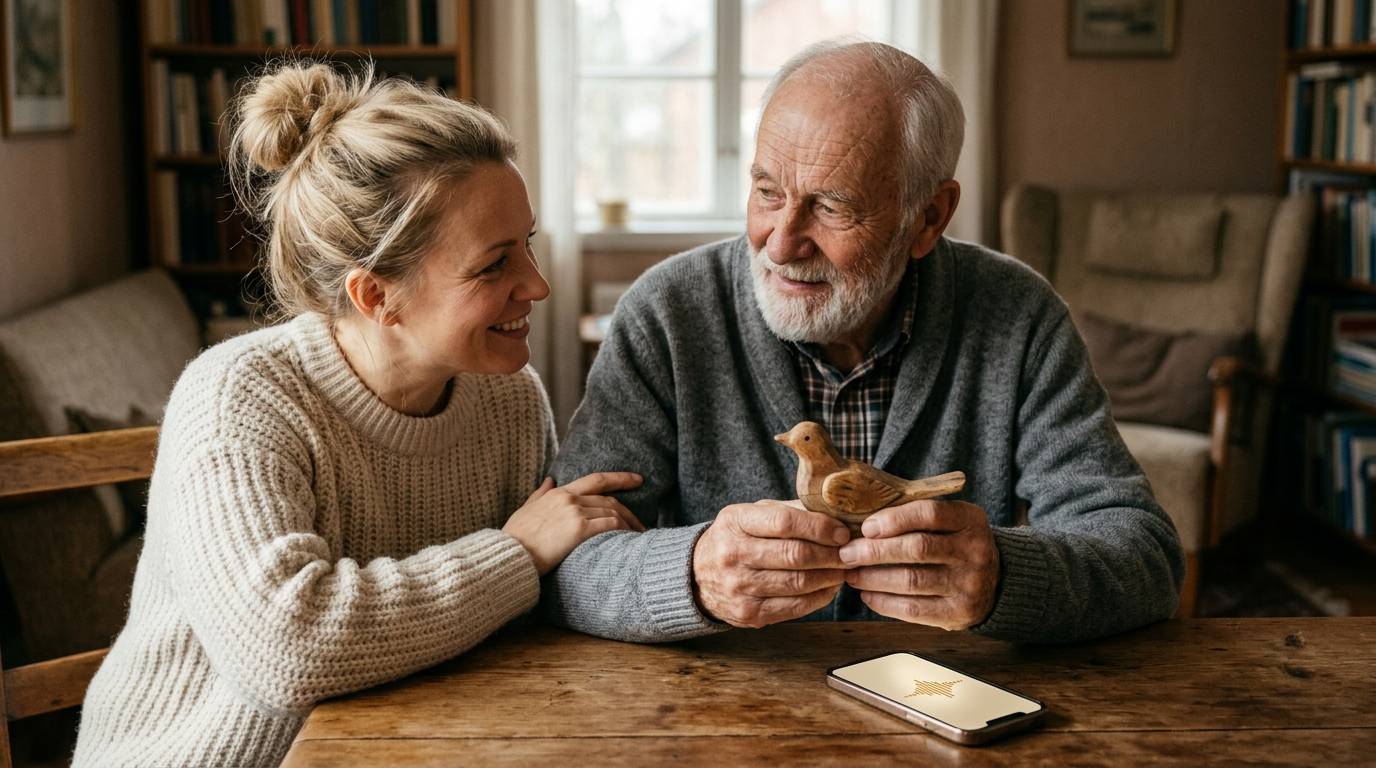
An early-stage memory illness diagnosis is always a heart-stopping moment for the entire family. As short-term memory begins to falter, the affected person may experience deep uncertainty and a fear of losing themselves. When we consider ways of supporting dementia patients, another equally important form of care often rises alongside medical treatment: caring for the soul and identity.
Gentle and guided reminiscence work is one of the best ways to restore the patient's self-esteem and support their self-image.
Dementia, Memories, and the Preserved Core
It is typical for memory illnesses, such as Alzheimer's disease, that short-term memory disappears first, while things from decades ago may remain clear for a long time. Childhood summers, a first job, or the first encounter with a spouse are memories rooted deep in the brain's emotional centers.
When the affected person gets to talk about these clear moments, they are no longer the patient who forgot their breakfast. They are once again the experienced professional, the brave youth, or the family pillar they have always been. Dementia memories are not just a rehearsal of the past; they are anchors that tether a person back to their own valuable identity.
(Want to read more about the effects of reminiscing on the brain? See our main article: Reminiscence Therapy and Its Benefits for Aging Memory)
The Freedom of Speaking, the Burden of Writing
When a family wants to save the stories of someone with a memory illness, traditional methods often become an obstacle. Writing with a pen or typing requires fine motor skills, concentration on spelling, and visual word recognition—things that cognitively overload a sick mind too much and cause frustration.
Sanota was developed to solve this exact problem. It completely removes the strenuous reading and writing requirement. The affected person can focus solely on speaking. Speech is our most natural way to communicate, and producing it often remains fluent long as the illness progresses.
The Role of the Caregiver or Relative in Reminiscence Work
Sanota is not just a tool for the patient; it is a shared bridge between the relative and the senior. You can sit down in a peaceful environment, open a ready-made question from the app, and let the conversation flow.
Your only job is to listen, hold their hand, and perhaps ask clarifying questions. Sanota's AI listens in the background and shapes even rambling speech into a clear, beautiful story that is saved in your family's shared book. This way, not a single precious memory is lost, and your shared moment remains unhurried and warm.
Try Sanota for free here and start your shared reminiscence work gently by speaking.